
Top 5 Tourist Attractions In Quebec City: Old Québec, Château Frontenac, Montmorency Falls, Plains of Abraham, Petit Champlain.
Planning a first visit to Québec City and want the can’t-miss sights? Here’s a tight, practical guide that gives you the big five, why they matter, how long to budget, and the easiest ways to see them without wasting steps. You’ll also get photo angles, seasonal pointers, and food stops that slot in neatly between landmarks.
Top Tourist Spots In Québec City: The Must-See Five
This short list blends history, views, and local flavor. Use the quick table below to size each stop, then dive into the on-the-ground details that follow.
| Attraction | Why Go | Time Needed |
|---|---|---|
| Old Québec (Upper & Lower Town) | UNESCO-listed streets, stone buildings, river overlooks | 2–4 hours |
| Château Frontenac & Terrasse Dufferin | Iconic skyline, terrace views, lively street life | 45–90 minutes |
| Montmorency Falls Park | 83-meter cascade, suspension bridge, cable car | 1.5–3 hours |
| Plains of Abraham | Historic battlefield turned green belt with museums | 1–2 hours |
| Quartier Petit Champlain | Cobblestone lanes, boutiques, bistros, murals | 60–90 minutes |
Old Québec (Upper & Lower Town)
The walled heart of the city sits on a clifftop and spills down to the waterfront. Upper Town holds the ramparts, steep lanes, and wide river views. Lower Town wraps around the old harbor and Place Royale, a postcard-ready square with church spires, shopfronts, and stone façades. The funicular cuts the hill if you’d rather ride than climb.
Best route: start on the clifftop near Porte Saint-Louis, walk the fortifications, then drift along Rue Saint-Jean and Rue Saint-Louis toward the river. Drop to the waterfront by the funicular or the “Breakneck” stairs, wander Place Royale, and loop through fresco-lined alleys back to the base of the hill. This loop keeps you close to cafés when you want a warm pastry or a maple twist.
Why it matters: this historic core preserves a rare North American blend of French and British urban design, with stone ramparts, fortified gates, and densely layered streets. For context and background, see UNESCO’s page for the Historic District of Old Québec, which outlines the site’s boundaries and heritage values.
Château Frontenac & Terrasse Dufferin
That copper-roofed castle above the river? It’s the city’s signature landmark. The hotel’s towers rise over a long wooden boardwalk that curves along the cliff. Street musicians, gelato stands, and lookout points make the terrace a natural pause between sights. On clear evenings, you’ll catch ferries sliding across the St. Lawrence and the lights of Lévis blinking on the far bank.
Best photo angles: the lawn below the monument to Samuel de Champlain; the curve of Terrasse Dufferin facing the castle; and Rue du Trésor, where artists hang their work along the stone walls. If you’re stepping inside, common areas are open to visitors; respectful, quick passes are welcome, and the lobby’s woodwork and marble details reward a closer look.
Timing tip: swing by early morning for empty boardwalk shots, or near sunset when the copper glows. Street life peaks from late spring through fall, with ice-cream lines and buskers creating an easygoing buzz.
Montmorency Falls Park
A short hop from the old city brings you to an 83-meter waterfall that drops in a white sheet beside the river. A suspension bridge spans the brink, stairs hug the cliff, and a cable car glides from the base to the top. Mist lingers on warm days; in winter, spray can freeze into a mini “sugar loaf” mound near the plunge pool.
Getting there: drive or rideshare in about 15 minutes, or take public transit with a short walk at the end. Plan extra time if you want to cross the bridge, ride the cable car, and follow the boardwalks to different viewpoints.
Comfort plan: the base area has restrooms and a café in season. On windy days, bring a light shell; you may catch spray up top. The park’s official pages note the full height and site layout; a practical overview sits on the city’s tourism listing, while the operating details live with the park operator.
Plains of Abraham
Stretching behind the cliffline, this green plateau is a peaceful counterweight to the tight old streets. Trails thread lawns and gardens, and a compact museum anchors exhibits on the 1759 battle and later events. Picnic spots, cross-country ski tracks in winter, and seasonal programs make it a handy reset between stone lanes and viewpoints.
Where it fits in your day: walk up from the Citadelle side, loop the trails, then drop back to the cliff to rejoin the terrace and the skyline views. When events are running, check museum times to pair an indoor stop with your walk.
Background: the site is managed by a federal agency that maintains the grounds and museum program; see the National Battlefields Commission for institutional details and seasonal exhibitions.
Quartier Petit Champlain
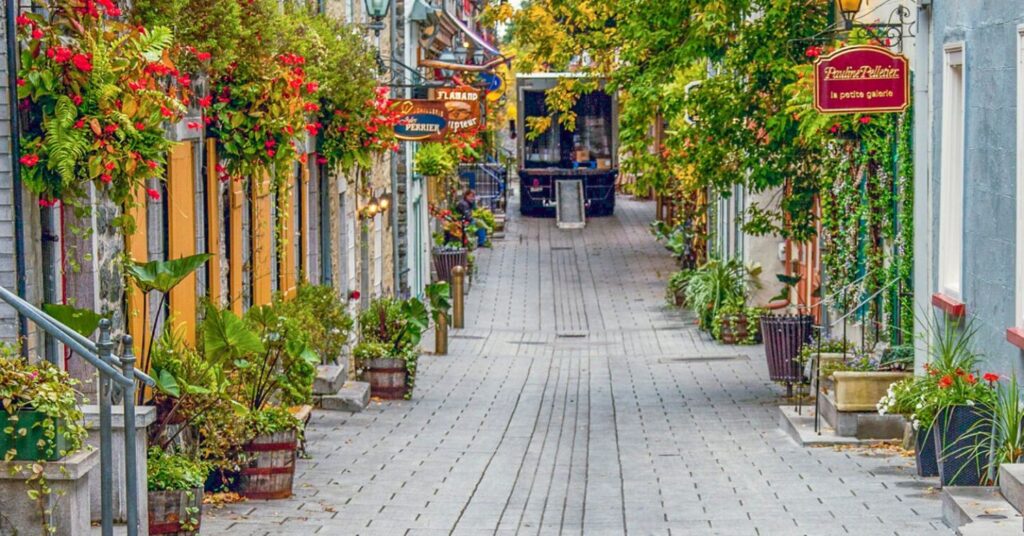
At the base of the cliff, narrow cobblestone lanes weave between stone shopfronts, hanging signs, and small public squares. This is the place for hand-made goods, warm bistros, and seasonal décor that hits max charm in December. Street murals and stepped alleys create natural frames for photos; look for the wide view back up the hill with the castle crowning the skyline.
Smart pacing: go early to dodge tour-bus clusters or return near dusk when lights flick on and the crowd thins. Breaks are easy—most restaurants seat fast outside peak lunch and dinner hours, and the funicular is a few minutes away if you’re heading back up.
How To String The Big Five Into One Smooth Day
If your time is tight, start on the clifftop, roll along the terrace, and drop to the waterfront after lunch. Save the waterfall for a separate block so you’re not rushing bridges and lookouts.
- Morning: Ramparts walk in Upper Town, boardwalk time by the castle, coffee break with a river view.
- Midday: Lower Town loop through Place Royale and the boutique lanes; grab a quick bistro plate.
- Afternoon: Taxi or bus to the waterfall; cross the suspension bridge and ride the cable car back.
- Evening: Return to the terrace for sunset, then drift to dinner along Rue Saint-Jean or in the Lower Town.
Need a primer on the city’s ramparts, gates, and guided walks? Parks Canada maintains clear visitor pages for the Fortifications of Québec National Historic Site, covering routes and seasonal programming.
On-The-Spot Tips For Each Landmark
Old Québec
- Best light: Morning for sun on Lower Town façades; late day for golden walls up top.
- Stairs vs. ride: Breakneck Stairs offer classic angles; the funicular saves your legs.
- Food stop: Sample maple taffy on snow at seasonal stalls or grab a buckwheat crêpe on side streets.
Château Frontenac & Terrasse Dufferin
- Quiet slot: Early mornings and weekdays outside July–August.
- Angles: Step down the terrace toward the kiosks for wide frames of the castle and river.
- Rain plan: Duck into nearby galleries and covered lanes off Rue du Trésor.
Montmorency Falls Park
- Wind & spray: A light shell helps when gusts push mist across the bridge.
- Footwear: Grippy soles for boardwalks and stairs; handrails can feel slick in fog.
- Winter wow: The frozen mound near the base creates surreal shapes after cold snaps.
Plains of Abraham
- Route: Enter near the Citadelle and loop toward the museum for a tidy circuit.
- Picnic: Groceries and baked goods on Rue Saint-Jean pack well for the lawns.
- Snow season: Groomed tracks appear after storms; rentals pop up in peak winter.
Quartier Petit Champlain
- Quiet window: Early morning window-shopping beats the mid-day swell.
- Photo cue: Look back up Rue Sous-le-Fort toward the clifftop for a natural frame.
- Gifts: Local woolens, maple sweets, and leatherwork travel well.
Best Seasons, Crowds, And Weather Moves
Spring opens café terraces and soft light over the river. Summer brings festivals, long evenings, and the most visitors. Fall paints the parks and the cliffline, while winter swaps cobbles for crunching snow and lights the old streets for the holidays. Crowds peak on cruise-ship days; look for early starts, midday museum breaks, and late-day returns to open spaces.
| Season | What Shines | Pro Tip |
|---|---|---|
| Spring (Apr–May) | Quiet lanes, budding parks, crisp river views | Layer up; mornings run cool on the terrace. |
| Summer (Jun–Aug) | Street music, long golden hours, open museums | Book the waterfall cable car in the morning. |
| Fall (Sep–Oct) | Color on the Plains, soft light in Lower Town | Weekdays trim crowds in boutique lanes. |
| Winter (Nov–Mar) | Snowy ramparts, twinkle lights, ice sculptures | Wear traction cleats for steep lanes. |
Practical Map-Free Orientation
Think of the city in three stacked bands. Up top: ramparts, the castle, and the long boardwalk. Mid-slope: the Citadelle and parkland. At the base: cobblestone lanes and the riverside squares. The waterfall sits beyond the old town; treat it as a half-day add-on with a built-in café break.
Accessibility And Pace
The core is walkable, with many slopes and steps. The funicular links the cliff to the waterfront for a level alternative, and city buses reach the waterfall entrance. The wide boardwalk by the castle offers smooth surfaces and benches. Museum entries and many shops provide step-free access, though some historic doorways run narrow.
Food And Coffee Near Each Stop
- Upper Town: Cafés along Rue Saint-Jean pour solid espresso and quick croissants.
- Terrace: Kiosks carry snacks; sit on the steps facing the river for a breezy bite.
- Lower Town: Bistro menus lean cozy—tourtière, soup, and maple-drizzled sweets.
- Waterfall: Seasonal cafés at the base and top make easy pit stops between viewpoints.
- Plains Area: Picnic with market nibbles and stroll shaded paths after lunch.
Photo Spots That Win Without Crowds
- Terrasse Dufferin: Angle the boardwalk rails toward the castle to lead the eye.
- Rue du Petit-Champlain: Face uphill at blue hour for warm shop lights against the cliff.
- Place Royale: Step to the corners to frame church spires and cobbles.
- Waterfall Bridge: Shoot upstream for the full drop and the mist plume.
- Ramparts: Use gaps in the walls to frame the river and Lévis hills.
Safety, Comfort, And Small Saves
Sturdy shoes make cobbles easy. In winter, add traction cleats and a wind-blocking layer for the terrace and the bridge over the falls. In summer, pack water; shady pockets are close together, but open plazas can feel bright at midday. ATMs cluster in Upper Town and Lower Town near main squares.
Good-To-Know Links For Deeper Context
For heritage background, the UNESCO listing for the Historic District of Old Québec outlines why the old city holds World Heritage status. For routes on the ramparts, guided walks, and site operations, Parks Canada’s page for the Fortifications of Québec gives current details on access and programming.
Trip-Ready Wrap-Up
Give yourself a full day for the core and a separate block for the waterfall. Start with walls and terrace views, slide down to river streets for art and food, and finish with sunset back on the boardwalk. That rhythm delivers the city’s skyline, its layered history, and its most loved neighborhoods without backtracking or sprinting between stops.