
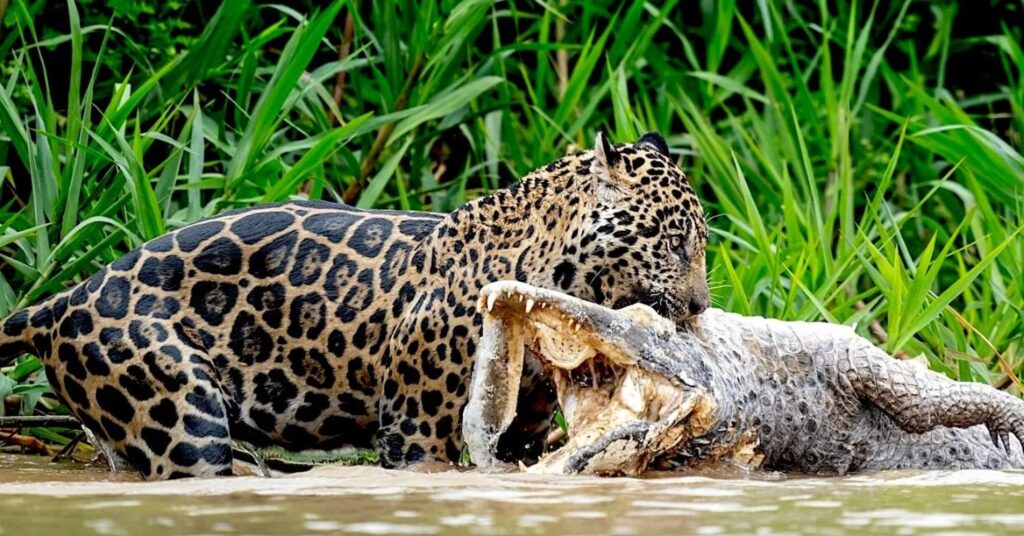
This guide shows when to go, where to base, and how to see jaguars and giant otters without stressing the wetland.
The world’s largest tropical wetland sits across Brazil, Bolivia, and Paraguay. Water rules travel here. When rivers drop, animals crowd the banks. When floods rise, boats glide over fields that looked like plains just months earlier. Plan around that pulse and you’ll stack the odds in your favor while keeping the ecosystem front and center.
Pantanal Wildlife Trip Planner: Routes, Seasons, Budget
Two broad halves shape a visit: the north linked to Cuiabá and the south linked to Campo Grande. Both serve big cats, big birds, and big skies. The north has easy access to river-based jaguar days around Porto Jofre. The south mixes cattle ranches, gallery forests, and lodges where hyacinth macaws, tapirs, and caiman fill your memory card. Pick the window that matches your goals, then choose the base that makes transfers short and dawn starts simple.
Best Time To Go
The dry window from late June through October brings lower water, clearer tracks, and wildlife clustering along channels. Photographers love the light and the quiet water. Birders score during the late dry months when sandbars and exposed banks turn into stage sets. The wet months (roughly November to March) bring lush greens, breeding activity, and big storm drama, but some roads close and boat runs can stretch out. Shoulder months (April–May) can be sweet for fewer boats and cooler mornings.
Season Calendar And Likely Sightings
| Months | Conditions | Wildlife Odds |
|---|---|---|
| Jan–Mar | High water, storms, lush growth | Breeding birds, caiman everywhere; mammals spread out |
| Apr–May | Falling water, cooler mornings | Rising sightings from boats; good for bird diversity |
| Jun–Aug | Dry, cooler, easier travel | Strong big-cat boat days; tapir roadside dusk shots |
| Sep–Oct | Lowest water, hot afternoons | Peak big-cat encounters; giant otter families fishing |
| Nov–Dec | Rains building, heat, fresh green | Many birds in breeding plumage; access can vary |
Where To Base: North Vs. South
Fly to Cuiabá for the northern section or Campo Grande for the southern side. From there, transfers run by road or by a mix of road and river. Expect graded dirt and wooden bridges; a seasoned driver is part of the team. In the north, the Transpantaneira road threads lodge gates all the way to Porto Jofre, where day boats work the Cuiabá and its branches. In the south, ranch lodges blend wildlife with a working-landscape feel, plus night drives on private roads.
North Pantanal Snapshot
Think river mazes and boat engines at dawn. Boats scan banks for movement: a ripple, a tail flick, a capybara scramble. When a big cat appears, guides manage angles, distance, and currents while keeping stress low. Giant otters patrol as a crew, yawning wide and chattering between dives. Kingfishers, jabiru storks, and skimmers turn every bend into a checklist tick.
South Pantanal Snapshot
Here, photo days often mix walks, drives, and blinds. Blue macaws swing between palms; rheas stride across open pasture; crab-eating foxes trot the track edges. Night drives lift the curtain on armadillos, ocelots, and great horned owls. Water levels matter here too, yet access tends to be steadier across the year thanks to private roads and ranch know-how.
Ethical Wildlife Viewing That Actually Helps
Wildlife first, photos second. That single rule protects the animals, the guides’ licenses, and your shots in the long run. Good operators brief guests on boat spacing, engine idling, and rotation near shy subjects. On land, your guide will set a view line that keeps comfort distance for tapirs and anteaters. If an animal shows stress—open-mouth breathing, alarm calls, tail flicks—back off. A calm subject lingers longer and gives better looks.
Picking A Responsible Operator
- Small boat ratios (ideally 4–6 guests per boat for big-cat days).
- Skippers trained to cut engines early and hold a quiet drift.
- Clear rules on no baiting and no blocking a cat’s path.
- Night-drive protocols that limit spotlight time and brightness.
- Local conservation ties and guide training with field data programs.
Logistics: Visas, Health, And Safety Basics
Check entry rules for your passport before booking flights; rules change and can vary by nationality. Vaccination advice may include routine shots and protections suited to tropical wetlands. Wear long sleeves, use repellent, and pack a head-net if bugs love you. Hydration salts help on hot afternoons. Sun sleeves, a wide hat, and a buff keep you comfortable on open boats.
Airports, Transfers, And Boat Days
Cuiabá (CGB) serves the north; Campo Grande (CGR) serves the south. Transfers to riverside bases range from three to six hours depending on rain and roadwork. Boat departures often sit at first light to beat heat and wind. Midday rests help you last through golden hour. Many lodges build a rhythm of two outings daily, with flexible timing when sightings run long.
Paperwork And Park Areas
Some sections are private or require prior clearance, which reputable guides handle in advance. A portion of the region enjoys international recognition for biodiversity value; see the UNESCO site description for context on protected zones and why safeguards matter.
What You’ll See: Flagship Species And Habitats
This floodplain holds a stacked roster: jaguars, giant otters, capybaras, caiman, tapirs, marsh deer, howlers, and hyacinth macaws. Overhead, wood storks march in lines, jabiru pairs guard nests, and black skimmers shave the surface at dusk. Under the surface, piranhas share space with pacu and dourado. The mix shifts with water. Islands appear then vanish. Backwaters turn into main channels within weeks.
Big-Cat Boat Strategy
Stay patient. Big cats move by cover. Skippers watch bank trails, fresh tracks in soft mud, and capybara alarm barks. When a cat rests, a respectful arc of boats keeps lanes open so it can slip away. Angle for background, not only distance. A shot with reeds, termite mounds, or river curves tells the story better than a tight crop alone.
Birding Notes
Bring binoculars in the 8× to 10× range and a light harness. A bridge camera or a 100–400 mm lens earns its seat. In many months, you’ll log herons, ibis, jacanas, and kingfishers in a single bend. Late dry season adds vast rookeries and fish-boil frenzies. Field counts for this biome are impressive; background reading on species diversity sits on the WWF Pantanal page.
Itinerary Building: How Many Days, Which Side, What Pace
Four nights gives a taste. Six to eight nights lets weather swing your way and spreads bets across sites. Mix boat bases with a land lodge if time allows. That way you get river hunts in the north or south plus night drives and hide time for owls and small cats. If you only have one base, choose the one with the least transfer friction so you spend time on the water, not in a van.
Sample Day On The River
- Pre-dawn coffee and gear check.
- Boat launch at first light; bird flurries and otter patrols.
- Mid-morning cool box break in shade.
- Return by late morning for brunch and a midday rest.
- Afternoon scan of side channels and sandbars.
- Golden-hour glide back toward base with skimmers and herons.
Gear That Makes Sense (And What To Skip)
Pack light but smart. The sun and spray shape choices more than anything.
Camera And Optics
- Telephoto reach to 400–600 mm for cats and otters.
- Wide zoom (24–70 mm) for boat life and storm light.
- Dry bag, spare batteries, soft cloths, and a blower.
Clothing And Boat Comfort
- Neutral colors, quick-dry shirts, long pants, light rain shell.
- Deck shoes or sandals with grip; no dangling laces on boats.
- Neck buff, brimmed hat, strong sunscreen, lip balm.
Health And Field Basics
- Repellent, sun sleeves, electrolyte packets.
- Personal meds and a compact kit for blisters and bites.
- Reusable bottle; many lodges supply filtered refills.
Costs, Booking Windows, And Lodge Types
Rates climb during peak dry months and for boats with extra range or premier skippers. Smaller lodges fill first, so book early if your dates sit in late July through October. Ask about included outings, boat hours, and group size. Clarify night drives and private hide time if that matters to you. In the north, river camps lean boat-heavy. In the south, ranch lodges blend drives, blinds, and short walks.
Field Conduct: Low Impact, High Reward
Stay on paths. Keep voices low near dens and nests. Wear a life vest on boats. Use a towel to cushion long lens feet on gunnel rails. No drones unless you hold written clearance for that spot and that day; most lodges ban them. Carry out batteries and filters. Refill from large water jugs instead of buying a stack of small bottles.
Conservation Context In Plain Language
This biome floods and drains on a grand scale. That dance feeds fish runs, bird nesting, and the prey base for apex hunters. Protection depends on keeping that flow as natural as possible and stopping practices that dry or burn the floodplain. Before you go, skim the UNESCO overview of protected areas and why hydrology matters across seasons.
Route And Base Comparison
Use this quick matrix to match your wish list with a launch point. Both halves deliver great days; the right choice is the one that trims transit and lines up with your style.
| Base | Best For | Notes |
|---|---|---|
| Porto Jofre (North) | Boat-led big-cat searches | Fast access to river forks; hot mid-season afternoons |
| Transpantaneira Lodges | Mixed birding, night drives | Bridge-filled road; great dawn light over wetlands |
| Ranch Lodges (South) | Hyacinth macaws, tapirs, ocelot hides | Private roads steady access; strong night outings |
Seven Smart Moves That Pay Off
- Book Enough Nights: Rain, heat, and river moods swing fast; extra days smooth luck.
- Prioritize Dawn: Light, calm water, and wildlife activity peak early.
- Carry Ear Protection: Boat engines near banks can be loud during long waits.
- Pack A Soft Cooler: Ice packs keep drinks and fruit fresh on drawn-out sessions.
- Respect Quiet Calls: When your skipper lowers a hand, keep voices down and lenses steady.
- Rotate Spots: Let others slide in after you’ve banked frames; everyone wins and stress drops.
- Tip The Crew: Boat hands and trackers work long, hot hours—your thanks matters.
Safety And Weather Reality
Heat hits hardest in late dry months. Plan shade breaks and cool towels. Storms can pop fast in the wet months; skippers read sky lines and call returns early when needed. Roads may hold standing water; trust your driver’s call on bridge crossings. Lodges carry radios, backup boats, and check-in windows with base.
Background Reading If You Want The Big Picture
For a science-backed snapshot of scale and species counts, scan the WWF region page. For protected-area details, the UNESCO listing lays out boundaries and values. Brazil’s tourism portal also introduces this biome and its highlights at VisitBrasil.
One-Bag Packing List For Wetlands
- Light duffel, soft sides for small boats and pickup beds.
- Quick-dry shirts, two pairs of long pants, one fleece for dawn.
- Wide-brim hat, buff, polarized sunglasses.
- Repellent, sunscreen, after-sun lotion, basic meds.
- Binoculars, camera kit, dry bags, spare cards.
- Refillable bottle, electrolyte packets, snacks.
- Compact headlamp with red mode for night walks.
Sample 7-Night Plan That Works
This split gives you time on rivers plus land time for night life and macaws. Swap north/south based on flight deals and lodge space.
Days 1–4
Fly into Cuiabá or Campo Grande. Transfer to a river base. Three full days of boat outings with a midday rest. One dusk session extends until blue hour if the water stays glassy.
Days 5–7
Shift to a lodge with night drives and blinds. Aim for one tapir dusk, one ocelot hide, and one dawn bird circuit. Keep departure day light with a morning outing and an early lunch before the road back to the airport.
Photo Ethics In Practice
Never box an animal in. Leave a clear retreat path. Keep boat wakes small near dens. Limit flash on night drives; many lodges ban it for cats and owls. Share records with your guide so local datasets grow stronger. The best images come from calm subjects and patient crews.
Why This Wetland Captures Travelers
It’s the mix. Big cats on riverbanks. Giant otters working as a family. Endless bird life stacked in layers across open water and palm islands. Each bend brings another scene, yet the pace stays unhurried when crews do it right. Plan with the flood pulse in mind, give animals space, and your days on the water will read like a field notebook you’ll never misplace.